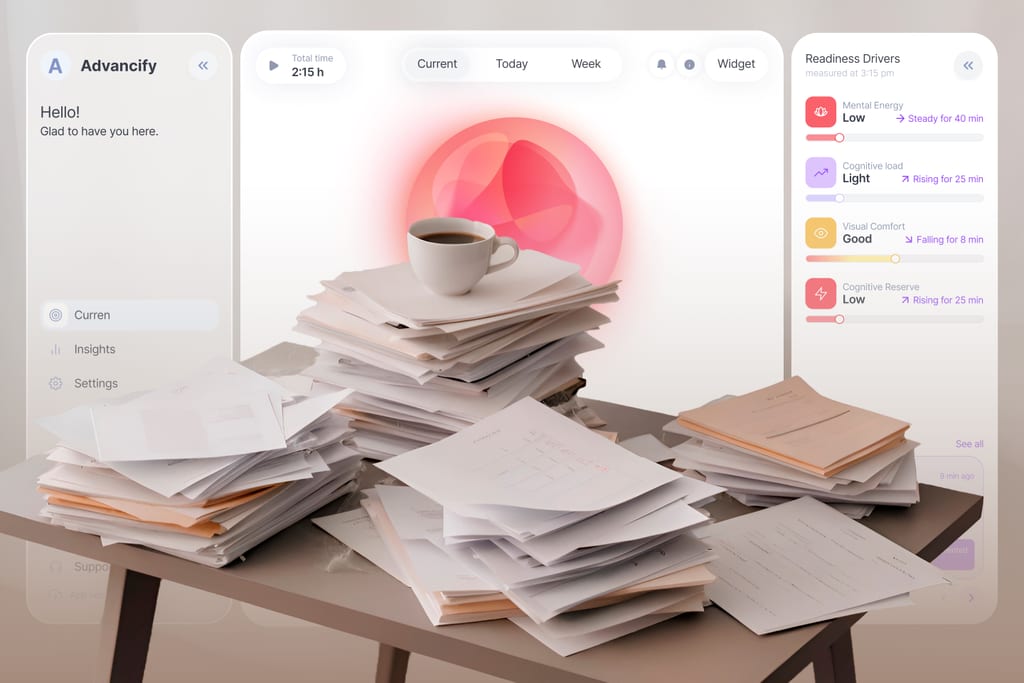
Discover Recharge Window and make recovery part of your performance
'%3e%3cpath%20d='M17.4339%200H1.39001C0.621457%200%200%200.606748%200%201.35691V17.467C0%2018.2172%200.621457%2018.8276%201.39001%2018.8276H17.4339C18.2025%2018.8276%2018.8276%2018.2172%2018.8276%2017.4707V1.35691C18.8276%200.606748%2018.2025%200%2017.4339%200ZM5.58576%2016.0439H2.79104V7.05667H5.58576V16.0439ZM4.1884%205.83214C3.29115%205.83214%202.56673%205.10772%202.56673%204.21414C2.56673%203.32057%203.29115%202.59615%204.1884%202.59615C5.08198%202.59615%205.8064%203.32057%205.8064%204.21414C5.8064%205.10404%205.08198%205.83214%204.1884%205.83214ZM16.0439%2016.0439H13.2529V11.6753C13.2529%2010.6346%2013.2345%209.29244%2011.8003%209.29244C10.3478%209.29244%2010.1272%2010.4287%2010.1272%2011.6018V16.0439H7.33982V7.05667H10.0169V8.28487H10.0536C10.425%207.57884%2011.337%206.83236%2012.6939%206.83236C15.5217%206.83236%2016.0439%208.69305%2016.0439%2011.1127V16.0439V16.0439Z'%20fill='%2315171C'/%3e%3c/g%3e%3cdefs%3e%3cclipPath%20id='clip0_912_10296'%3e%3crect%20width='18.8276'%20height='18.8276'%20fill='white'/%3e%3c/clipPath%3e%3c/defs%3e%3c/svg%3e)

'%3e%3cpath%20d='M9.41379%200C4.21474%200%200%204.21474%200%209.41379C0%2013.8285%203.03953%2017.533%207.1398%2018.5504V12.2906H5.19867V9.41379H7.1398V8.17419C7.1398%204.97011%208.5899%203.48499%2011.7356%203.48499C12.3321%203.48499%2013.3612%203.60209%2013.7822%203.71883V6.32645C13.56%206.3031%2013.174%206.29143%2012.6947%206.29143C11.1512%206.29143%2010.5547%206.87621%2010.5547%208.39635V9.41379H13.6297L13.1014%2012.2906H10.5547V18.7587C15.2161%2018.1957%2018.828%2014.2269%2018.828%209.41379C18.8276%204.21474%2014.6128%200%209.41379%200Z'%20fill='%2315171C'/%3e%3c/g%3e%3cdefs%3e%3cclipPath%20id='clip0_912_10302'%3e%3crect%20width='18.8276'%20height='18.8276'%20fill='white'/%3e%3c/clipPath%3e%3c/defs%3e%3c/svg%3e)
'%3e%3cpath%20d='M9.41379%201.69522C11.929%201.69522%2012.2269%201.70625%2013.2161%201.75038C14.1354%201.79083%2014.6318%201.94527%2014.9628%202.07398C15.4004%202.24313%2015.7166%202.44906%2016.0439%202.77633C16.3749%203.10729%2016.5771%203.41985%2016.7463%203.85745C16.875%204.1884%2017.0294%204.68851%2017.0699%205.60415C17.114%206.59701%2017.125%206.89487%2017.125%209.40644C17.125%2011.9217%2017.114%2012.2195%2017.0699%2013.2087C17.0294%2014.128%2016.875%2014.6245%2016.7463%2014.9554C16.5771%2015.393%2016.3712%2015.7093%2016.0439%2016.0365C15.7129%2016.3675%2015.4004%2016.5697%2014.9628%2016.7389C14.6318%2016.8676%2014.1317%2017.022%2013.2161%2017.0625C12.2232%2017.1066%2011.9254%2017.1177%209.41379%2017.1177C6.89855%2017.1177%206.60069%2017.1066%205.6115%2017.0625C4.69219%2017.022%204.19576%2016.8676%203.8648%2016.7389C3.42721%2016.5697%203.11096%2016.3638%202.78369%2016.0365C2.45273%2015.7056%202.25049%2015.393%202.08133%2014.9554C1.95263%2014.6245%201.79818%2014.1244%201.75773%2013.2087C1.7136%2012.2159%201.70257%2011.918%201.70257%209.40644C1.70257%206.89119%201.7136%206.59333%201.75773%205.60415C1.79818%204.68483%201.95263%204.1884%202.08133%203.85745C2.25049%203.41985%202.45641%203.10361%202.78369%202.77633C3.11464%202.44538%203.42721%202.24313%203.8648%202.07398C4.19576%201.94527%204.69587%201.79083%205.6115%201.75038C6.60069%201.70625%206.89855%201.69522%209.41379%201.69522ZM9.41379%200C6.8581%200%206.53817%200.0110318%205.53428%200.0551589C4.53407%200.0992861%203.84642%200.261086%203.2507%200.492753C2.62924%200.735452%202.10339%201.05537%201.58122%201.58122C1.05537%202.10339%200.735453%202.62924%200.492753%203.24702C0.261086%203.84642%200.0992861%204.53039%200.055159%205.5306C0.0110318%206.53817%200%206.8581%200%209.41379C0%2011.9695%200.0110318%2012.2894%200.055159%2013.2933C0.0992861%2014.2935%200.261086%2014.9812%200.492753%2015.5769C0.735453%2016.1983%201.05537%2016.7242%201.58122%2017.2464C2.10339%2017.7685%202.62924%2018.0921%203.24702%2018.3312C3.84642%2018.5628%204.53039%2018.7246%205.5306%2018.7687C6.5345%2018.8129%206.85442%2018.8239%209.41012%2018.8239C11.9658%2018.8239%2012.2857%2018.8129%2013.2896%2018.7687C14.2898%2018.7246%2014.9775%2018.5628%2015.5732%2018.3312C16.191%2018.0921%2016.7168%2017.7685%2017.239%2017.2464C17.7612%2016.7242%2018.0848%2016.1983%2018.3238%2015.5806C18.5555%2014.9812%2018.7173%2014.2972%2018.7614%2013.297C18.8055%2012.2931%2018.8166%2011.9732%2018.8166%209.41747C18.8166%206.86177%2018.8055%206.54185%2018.7614%205.53796C18.7173%204.53774%2018.5555%203.85009%2018.3238%203.25438C18.0921%202.62924%2017.7722%202.10339%2017.2464%201.58122C16.7242%201.05905%2016.1983%200.735453%2015.5806%200.49643C14.9812%200.264763%2014.2972%200.102963%2013.297%200.0588362C12.2894%200.0110318%2011.9695%200%209.41379%200Z'%20fill='%2315171C'/%3e%3cpath%20d='M9.41373%204.57825C6.74403%204.57825%204.57812%206.74416%204.57812%209.41385C4.57812%2012.0835%206.74403%2014.2494%209.41373%2014.2494C12.0834%2014.2494%2014.2493%2012.0835%2014.2493%209.41385C14.2493%206.74416%2012.0834%204.57825%209.41373%204.57825ZM9.41373%2012.5506C7.68174%2012.5506%206.27702%2011.1458%206.27702%209.41385C6.27702%207.68186%207.68174%206.27714%209.41373%206.27714C11.1457%206.27714%2012.5504%207.68186%2012.5504%209.41385C12.5504%2011.1458%2011.1457%2012.5506%209.41373%2012.5506Z'%20fill='%2315171C'/%3e%3cpath%20d='M15.5694%204.38698C15.5694%205.01211%2015.0619%205.5159%2014.4404%205.5159C13.8153%205.5159%2013.3115%205.00844%2013.3115%204.38698C13.3115%203.76184%2013.819%203.25806%2014.4404%203.25806C15.0619%203.25806%2015.5694%203.76552%2015.5694%204.38698Z'%20fill='%2315171C'/%3e%3c/g%3e%3cdefs%3e%3cclipPath%20id='clip0_912_10305'%3e%3crect%20width='18.8276'%20height='18.8276'%20fill='white'/%3e%3c/clipPath%3e%3c/defs%3e%3c/svg%3e)

We tend to divide the day mentally into two categories:
work
and
not work.
A break automatically falls into the second category.
Five minutes away from work does reduce the amount of time you spend on a task. But working in a state of significant fatigue also has a cost: you may make decisions more slowly, retrace your steps more often, and need more effort to achieve the same result.
So it is more useful to count more than just the minutes spent on a task.
What also matters is the state you will be in during the next hour.
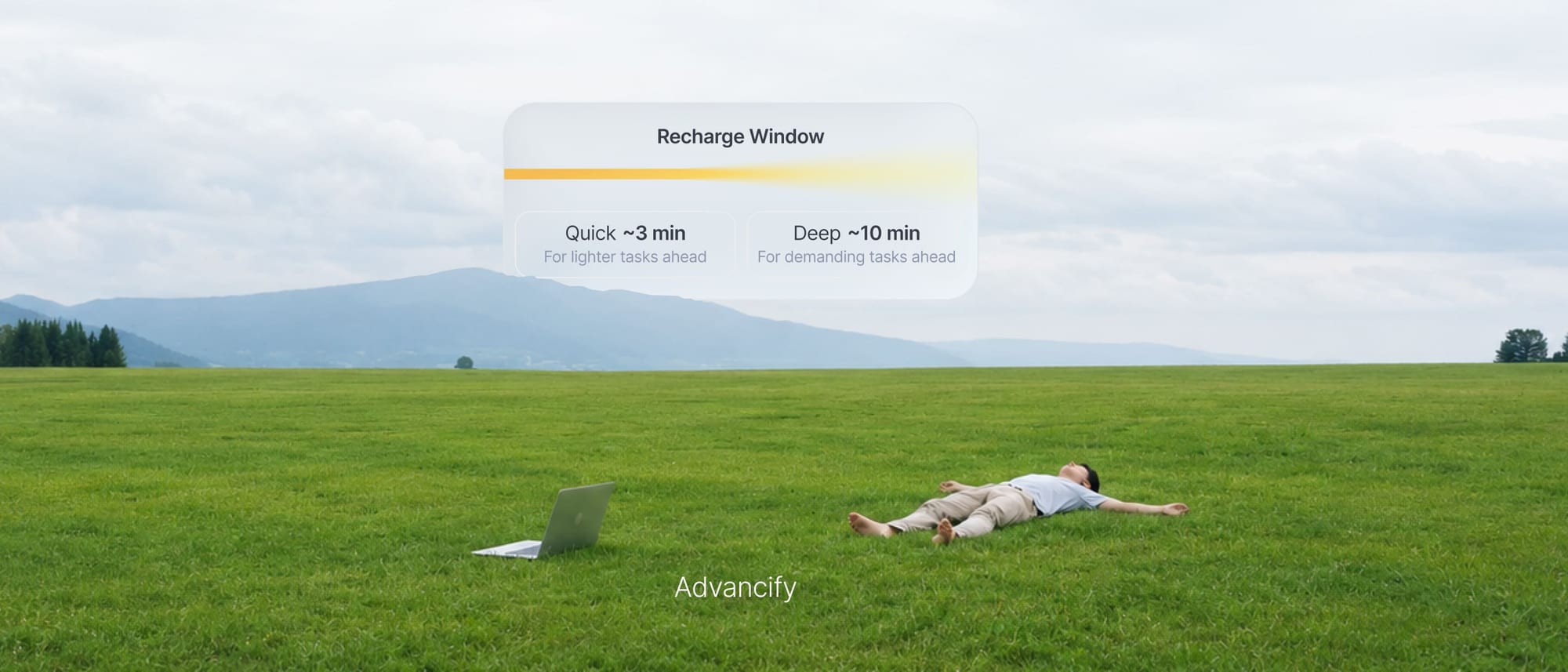
This is where Recharge Window becomes useful.
Its purpose is not to make you work less.
It helps you notice moments when recovery may be useful before the next period of demand, rather than only after you already feel completely exhausted.
More time spent working does not always mean more output
Imagine two strategies.
Strategy A
Work continuously until the decline in your state becomes obvious.
Only then take a long break.
Strategy B
Recover periodically before fatigue becomes pronounced, especially before the next demanding work block.
The total amount of time spent working may end up being similar.
But the quality of individual work periods may not be.
A 2022 meta-analysis of microbreaks, including 22 independent samples and 2,335 participants, found that short breaks significantly increased vigor and reduced fatigue.
The effect on overall performance was less clear and was not statistically significant across all types of tasks. For especially demanding cognitive work, a very short break may also be insufficient.
That is an important nuance.
Breaks are not magic.
Three minutes cannot automatically compensate for several hours of intense cognitive demand.
But recovery can influence the state in which you begin your next work block.
Think in work cycles, not interruptions
For demanding work, it can be more useful to think in terms of:
demand → recovery → demand → recovery
rather than:
work → work → work → finally rest
In this model, the meaning of a break changes.
It is no longer simply time subtracted from productivity.
It becomes part of preparing for the next period in which you will again need concentration, cognitive resources, and sustained performance.
In physical training, this principle feels natural.
An athlete does not treat recovery between training sessions as “lost training.” It is part of a broader training-and-recovery cycle.
Cognitive work is physiologically different, but the organizational principle is still useful:
what matters is not only the demand itself, but also what happens between periods of demand.
Recharge Window helps you choose the moment, not simply take a break
When Advancify shows a Recharge Window, it is more useful not to treat it as a command:
“You need to stop working now.”
Instead, ask a different question:
“What am I going to do next?”
If you are about to begin a difficult analysis, a long period of deep work, an important meeting, or another demanding task, recovery beforehand may make more sense.
If the workday is nearly over and only simple routine tasks remain, your decision may be different.
That is why Recharge Window is not only about your current state.
It becomes especially useful in the context of your next task.
The point is not to follow every recommendation blindly.
The point is to consider your current state together with the demands that are coming next.
Quick Recharge and Deep Recharge serve different purposes
Not every period of recovery needs to be the same.
After moderate demand, a short Quick Recharge may be enough to step away from the task briefly before your next work block.
After prolonged Intense Cognitive Load or several demanding work blocks, a longer Deep Recharge may be more appropriate.
Do not treat these options as universal prescriptions.
Look at your own response.
The same break can have a different effect after different types of workload.
Evaluate recovery by what happens afterward
The most useful question after a break is not:
“Did I enjoy those five minutes?”
but:
“What happened during the next work block?”
Over time, observe:
Does Mental Energy improve?
Does Focus Readiness stabilize?
Does Quick Recharge help after moderate demand?
Are there situations where a short pause is not enough after prolonged Intense Cognitive Load?
Does Deep Recharge become more useful after heavier periods of work?
Is it easier to begin the next demanding task after recovery?
This gradually turns recovery from the abstract advice to “take more breaks” into part of your own working pattern.
You stop asking:
“How can I rest as little as possible so I do not waste time?”
and start asking:
“What kind of recovery will help me perform better during my next work block?”
That is the idea behind Recharge Window:
not simply to stop working, but to choose a better moment for recovery based on what you want to do next.