Why we put off difficult tasks and why it’s not always procrastination
'%3e%3cpath%20d='M17.4339%200H1.39001C0.621457%200%200%200.606748%200%201.35691V17.467C0%2018.2172%200.621457%2018.8276%201.39001%2018.8276H17.4339C18.2025%2018.8276%2018.8276%2018.2172%2018.8276%2017.4707V1.35691C18.8276%200.606748%2018.2025%200%2017.4339%200ZM5.58576%2016.0439H2.79104V7.05667H5.58576V16.0439ZM4.1884%205.83214C3.29115%205.83214%202.56673%205.10772%202.56673%204.21414C2.56673%203.32057%203.29115%202.59615%204.1884%202.59615C5.08198%202.59615%205.8064%203.32057%205.8064%204.21414C5.8064%205.10404%205.08198%205.83214%204.1884%205.83214ZM16.0439%2016.0439H13.2529V11.6753C13.2529%2010.6346%2013.2345%209.29244%2011.8003%209.29244C10.3478%209.29244%2010.1272%2010.4287%2010.1272%2011.6018V16.0439H7.33982V7.05667H10.0169V8.28487H10.0536C10.425%207.57884%2011.337%206.83236%2012.6939%206.83236C15.5217%206.83236%2016.0439%208.69305%2016.0439%2011.1127V16.0439V16.0439Z'%20fill='%2315171C'/%3e%3c/g%3e%3cdefs%3e%3cclipPath%20id='clip0_912_10296'%3e%3crect%20width='18.8276'%20height='18.8276'%20fill='white'/%3e%3c/clipPath%3e%3c/defs%3e%3c/svg%3e)

'%3e%3cpath%20d='M9.41379%200C4.21474%200%200%204.21474%200%209.41379C0%2013.8285%203.03953%2017.533%207.1398%2018.5504V12.2906H5.19867V9.41379H7.1398V8.17419C7.1398%204.97011%208.5899%203.48499%2011.7356%203.48499C12.3321%203.48499%2013.3612%203.60209%2013.7822%203.71883V6.32645C13.56%206.3031%2013.174%206.29143%2012.6947%206.29143C11.1512%206.29143%2010.5547%206.87621%2010.5547%208.39635V9.41379H13.6297L13.1014%2012.2906H10.5547V18.7587C15.2161%2018.1957%2018.828%2014.2269%2018.828%209.41379C18.8276%204.21474%2014.6128%200%209.41379%200Z'%20fill='%2315171C'/%3e%3c/g%3e%3cdefs%3e%3cclipPath%20id='clip0_912_10302'%3e%3crect%20width='18.8276'%20height='18.8276'%20fill='white'/%3e%3c/clipPath%3e%3c/defs%3e%3c/svg%3e)
'%3e%3cpath%20d='M9.41379%201.69522C11.929%201.69522%2012.2269%201.70625%2013.2161%201.75038C14.1354%201.79083%2014.6318%201.94527%2014.9628%202.07398C15.4004%202.24313%2015.7166%202.44906%2016.0439%202.77633C16.3749%203.10729%2016.5771%203.41985%2016.7463%203.85745C16.875%204.1884%2017.0294%204.68851%2017.0699%205.60415C17.114%206.59701%2017.125%206.89487%2017.125%209.40644C17.125%2011.9217%2017.114%2012.2195%2017.0699%2013.2087C17.0294%2014.128%2016.875%2014.6245%2016.7463%2014.9554C16.5771%2015.393%2016.3712%2015.7093%2016.0439%2016.0365C15.7129%2016.3675%2015.4004%2016.5697%2014.9628%2016.7389C14.6318%2016.8676%2014.1317%2017.022%2013.2161%2017.0625C12.2232%2017.1066%2011.9254%2017.1177%209.41379%2017.1177C6.89855%2017.1177%206.60069%2017.1066%205.6115%2017.0625C4.69219%2017.022%204.19576%2016.8676%203.8648%2016.7389C3.42721%2016.5697%203.11096%2016.3638%202.78369%2016.0365C2.45273%2015.7056%202.25049%2015.393%202.08133%2014.9554C1.95263%2014.6245%201.79818%2014.1244%201.75773%2013.2087C1.7136%2012.2159%201.70257%2011.918%201.70257%209.40644C1.70257%206.89119%201.7136%206.59333%201.75773%205.60415C1.79818%204.68483%201.95263%204.1884%202.08133%203.85745C2.25049%203.41985%202.45641%203.10361%202.78369%202.77633C3.11464%202.44538%203.42721%202.24313%203.8648%202.07398C4.19576%201.94527%204.69587%201.79083%205.6115%201.75038C6.60069%201.70625%206.89855%201.69522%209.41379%201.69522ZM9.41379%200C6.8581%200%206.53817%200.0110318%205.53428%200.0551589C4.53407%200.0992861%203.84642%200.261086%203.2507%200.492753C2.62924%200.735452%202.10339%201.05537%201.58122%201.58122C1.05537%202.10339%200.735453%202.62924%200.492753%203.24702C0.261086%203.84642%200.0992861%204.53039%200.055159%205.5306C0.0110318%206.53817%200%206.8581%200%209.41379C0%2011.9695%200.0110318%2012.2894%200.055159%2013.2933C0.0992861%2014.2935%200.261086%2014.9812%200.492753%2015.5769C0.735453%2016.1983%201.05537%2016.7242%201.58122%2017.2464C2.10339%2017.7685%202.62924%2018.0921%203.24702%2018.3312C3.84642%2018.5628%204.53039%2018.7246%205.5306%2018.7687C6.5345%2018.8129%206.85442%2018.8239%209.41012%2018.8239C11.9658%2018.8239%2012.2857%2018.8129%2013.2896%2018.7687C14.2898%2018.7246%2014.9775%2018.5628%2015.5732%2018.3312C16.191%2018.0921%2016.7168%2017.7685%2017.239%2017.2464C17.7612%2016.7242%2018.0848%2016.1983%2018.3238%2015.5806C18.5555%2014.9812%2018.7173%2014.2972%2018.7614%2013.297C18.8055%2012.2931%2018.8166%2011.9732%2018.8166%209.41747C18.8166%206.86177%2018.8055%206.54185%2018.7614%205.53796C18.7173%204.53774%2018.5555%203.85009%2018.3238%203.25438C18.0921%202.62924%2017.7722%202.10339%2017.2464%201.58122C16.7242%201.05905%2016.1983%200.735453%2015.5806%200.49643C14.9812%200.264763%2014.2972%200.102963%2013.297%200.0588362C12.2894%200.0110318%2011.9695%200%209.41379%200Z'%20fill='%2315171C'/%3e%3cpath%20d='M9.41373%204.57825C6.74403%204.57825%204.57812%206.74416%204.57812%209.41385C4.57812%2012.0835%206.74403%2014.2494%209.41373%2014.2494C12.0834%2014.2494%2014.2493%2012.0835%2014.2493%209.41385C14.2493%206.74416%2012.0834%204.57825%209.41373%204.57825ZM9.41373%2012.5506C7.68174%2012.5506%206.27702%2011.1458%206.27702%209.41385C6.27702%207.68186%207.68174%206.27714%209.41373%206.27714C11.1457%206.27714%2012.5504%207.68186%2012.5504%209.41385C12.5504%2011.1458%2011.1457%2012.5506%209.41373%2012.5506Z'%20fill='%2315171C'/%3e%3cpath%20d='M15.5694%204.38698C15.5694%205.01211%2015.0619%205.5159%2014.4404%205.5159C13.8153%205.5159%2013.3115%205.00844%2013.3115%204.38698C13.3115%203.76184%2013.819%203.25806%2014.4404%203.25806C15.0619%203.25806%2015.5694%203.76552%2015.5694%204.38698Z'%20fill='%2315171C'/%3e%3c/g%3e%3cdefs%3e%3cclipPath%20id='clip0_912_10305'%3e%3crect%20width='18.8276'%20height='18.8276'%20fill='white'/%3e%3c/clipPath%3e%3c/defs%3e%3c/svg%3e)

When you know what you need to do but still don’t start
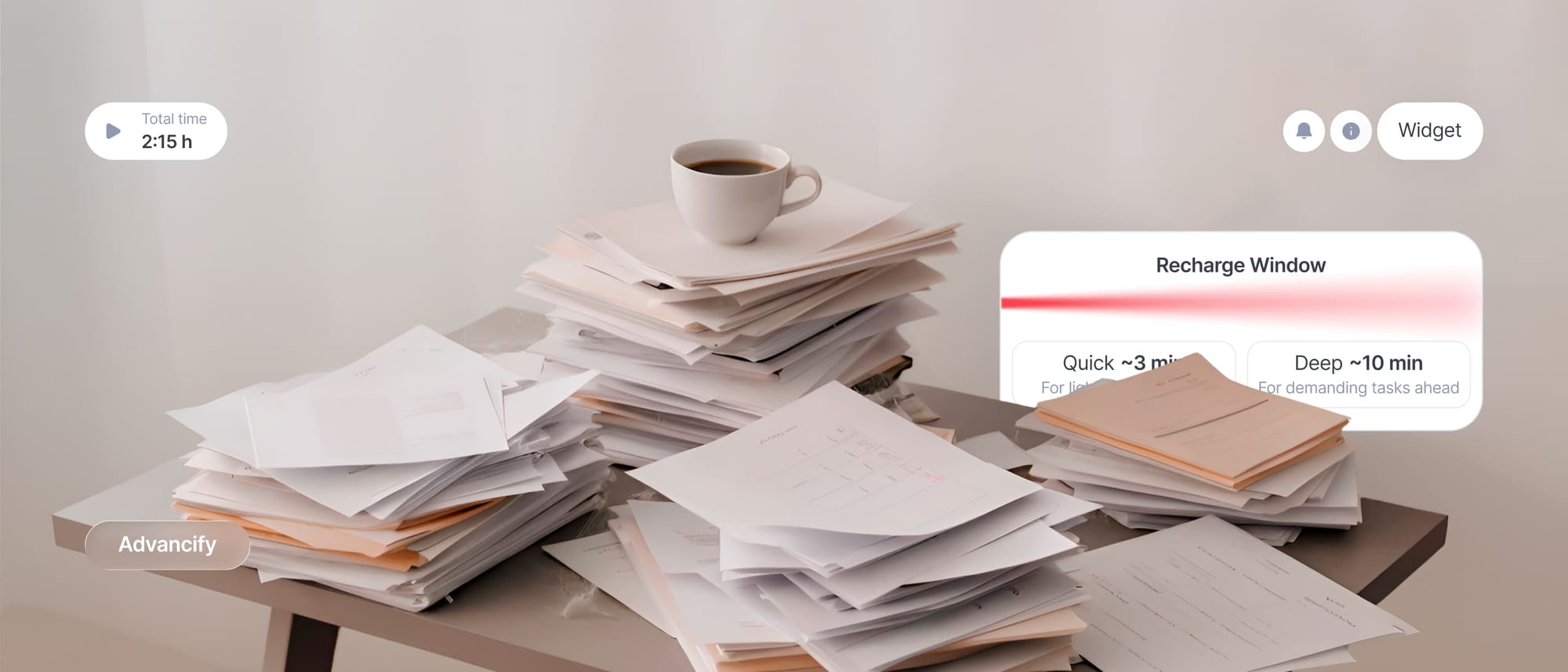
There’s an important report on your to do list, a difficult presentation, or a problem that requires several hours of focused work. You know it’s the task you should tackle first.
But instead, you reply to messages. Check your email. Fix a few small things. Open another tab. Knock out a couple of easy tasks and promise yourself you’ll get to the important one a little later.
From the outside, it’s easy to call this poor discipline or laziness.
But not every delay in starting difficult work comes from an unwillingness to work.
Sometimes the reason is more practical: your brain evaluates not only how important a task is, but also how much effort it will take to do it right now.
If the required effort feels too high relative to the resources currently available to you, an easier task becomes more attractive.
That’s why the familiar experience of “I worked all day but never started the most important thing” may sometimes have less to do with motivation and more to do with a mismatch between the demands of the task and your current state.
Why easy tasks are so tempting
Easy tasks have another advantage. They give you a quick sense of progress.
Answered an email. Done.
Replied to a message. Done.
Fixed a file name. Done.
Checked a notification. Done.
You can complete ten small tasks in an hour and feel busy.
A difficult project works differently. You can spend an hour analyzing information and finish without a single obvious item to check off your list.
That can create a dangerous substitution:
being busy starts to feel like being productive.
You really are working all day, but the task that matters most keeps getting pushed to tomorrow.
Why difficult tasks are harder to start
Difficult tasks require more cognitive resources.
You need to hold information in working memory, maintain focus, suppress distractions, make decisions, plan your next steps, and monitor your own errors.
So there’s a major difference between:
answering a simple email
and
working through a complex financial model.
The difference isn’t just how long each task takes. It’s also how much mental effort each one requires.
Research on decision making suggests that people treat cognitive effort as a kind of cost. All else being equal, we tend to prefer options that require less mental effort.
An easy task offers a more accessible action and often produces a faster result.
And the more costly a difficult task feels at a particular moment, the more attractive the easier alternative becomes.
The fewer resources you have, the harder the same task can feel
There’s another important detail. How difficult a task feels doesn’t depend only on the task itself.
It also depends on your current state.
Imagine doing the same analytical work first thing in the morning after you’ve had time to recover, and then after six hours of meetings, messages, decisions, and constant task switching.
The work hasn’t changed.
But your state has.
If substantial mental load has already accumulated throughout the day, the same task may feel as if it requires considerably more effort. As a result, choosing something easier becomes more tempting.
That familiar thought appears:
“I’ll do it later, when I can actually focus.”
The problem is that “later” keeps moving.
Procrastination isn’t just a time management problem
We often try to solve procrastination with a calendar.
Set a deadline.
Block out two hours.
Write a to do list.
Break the project into smaller steps.
These strategies can certainly help. But research on procrastination suggests that it isn’t only about time management. It is also associated with self regulation and our emotional response to unpleasant or demanding tasks.
A difficult task can create uncertainty, boredom, anxiety, fear of making a mistake, or simply the expectation of significant effort.
Putting it off is one of the fastest ways to temporarily escape that uncomfortable state.
That’s why procrastination can provide short term relief:
difficult task → discomfort → switch to an easier task → relief.
But the task itself hasn’t gone anywhere.
And if you move it to the next day without changing the conditions, the cycle can easily repeat:
the task still requires significant effort → available resources still feel insufficient → easier tasks become more attractive again → the difficult task gets postponed again.
This means that some of what we think of as procrastination may actually be a demanding task colliding with a moment when doing that task feels particularly difficult.
We try to solve the problem with willpower when sometimes it may be more effective to change when we do the task.
When is the right time to do difficult work?
We’re used to planning work primarily around time.
Your calendar knows when you have an open slot.
But it doesn’t know how many cognitive resources you’ll have available when that time comes.
Different tasks also require different levels of mental resources.
So it makes sense to consider not only when you have time available, but also the state you’re likely to be in when you do the task.
Periods of higher readiness for mental work can be better suited to activities that require deep concentration, analysis, and decision making.
Periods of lower readiness can be reserved for tasks that require fewer resources or are more familiar and routine.
This won’t eliminate procrastination completely. There are many reasons why people procrastinate. But this approach can reduce one factor that contributes to putting off difficult work: we plan tasks around our calendars without always considering how many resources we’ll have available when it’s time to do them.
Instead of repeatedly forcing yourself to start your most demanding work at the wrong moment, you can try to schedule it for a period when its subjective “cost” may be lower.
How Advancify helps you find the right time for difficult work
Advancify helps you see changes in workload and available resources through several metrics: Mental Energy, Cognitive Reserve, and Cognitive Load.
Mental Energy helps you understand how your current readiness for sustained mental work changes throughout the day.
As Advancify learns your individual patterns, it becomes easier to identify recurring trends: when demanding tasks tend to feel easier for you, which types of work are followed by faster changes in your state, and when maintaining prolonged concentration may require more effort.
Cognitive Reserve helps estimate how much capacity remains for demanding cognitive work. This lets you consider not only your current state, but also the cognitive load that has accumulated throughout the day.
Cognitive Load adds another important piece of context. It helps estimate how demanding your current activity is for you.
Together, Mental Energy, Cognitive Reserve, and Cognitive Load provide additional context for planning your workday.
If your Mental Energy is high, you have sufficient Cognitive Reserve, and you have a genuinely demanding task ahead, it may be a good time for deep focus, analysis, or complex decision making.
If your available resources have declined after a prolonged period of demanding work, it may make more sense to recover first or work on lighter tasks rather than forcing yourself to start the most difficult task of the day.
Over time, Advancify helps you understand your own patterns and organize tasks not only around free space in your calendar, but also around how many cognitive resources they require.
Gradually, this creates an individual map:
which task → how demanding it is for you → how many resources it requires → when it may be better to do it.
That makes it less likely that a difficult task will end up scheduled for exactly the moment when starting it is hardest.
So instead of asking yourself:
“Why can’t I make myself start this difficult task again?”
It may be more useful to ask:
“What state am I in when I’m trying to do this, and how many resources does this task require from me?”
Effective work management isn’t only about having the right list of tasks.
It’s also about matching the difficulty of a task and the load it creates with the cognitive resources you have available at that particular moment.
Sources
Kool W., McGuire J.T., Rosen Z.B., Botvinick M.M. (2010). Decision Making and the Avoidance of Cognitive Demand. Journal of Experimental Psychology: General.
Westbrook A. et al. (2013). What Is the Subjective Cost of Cognitive Effort? Load, Trait, and Aging Effects Revealed by Economic Preference. PLOS ONE.
Westbrook A., Braver T.S. (2015). Cognitive effort: A neuroeconomic approach. Cognitive, Affective, & Behavioral Neuroscience.
Massar S.A.A. et al. (2018). Quantifying the Motivational Effects of Cognitive Fatigue Through Effort-Based Decision Making. Frontiers in Psychology.